The 11th International and Comparative Urban Law Conference
Taking place in Mexico City,
Tuesday, May 12 - Thursday, May 14, 2026.
Speaker Bios

Pablo Francisco Miguel Aguilar González, has 32 years of experience in Urban Legislation. He was Director of Urban Development in Mexico and specialized in Urban Planning Law municipal official. Specializing in defense urban planning and constitutional litigator in Latin America.
Consultant governments and municipalities in Latin America. Consultant and trainer in urban legislation for Professional Associations, Governments, Experts Building and Urban Development, Universities in Mexico and Latin America. Advisor consultant development companies and investors for urban development projects in Latin America. Head of the law firm “Urban Lawyers” with Latin American scope in Urban Law. Lecturer in Europe, Asia, Africa and America in the field of urban law and human settlements legislation. Founding President of the National Legal Center for Urban Studies AC. President of the Association of Urbanistic Jurisprudence, CJUR International, Lead Partner of UN Habitat World Urban Campaign. Member of the International Academic Association on Planning Law, and Property Rights. Member of the International Research Group on Law and Urban Space. Member of the group of legal experts for the implementation of the New Agenda and UN Habitat & ECLAC Regional Action Plan for Latin America. Speaker and active participant about urban matters during the Habitat III Conference, and the UN Habitat World Urban Forums. Author of books and publications of Urban Planning Law in Mexico.

Ms. Anne Amin leads legislation work within the Policy and Legislation Section of UN-Habitat. With over twenty-five years of international professional experience, she specializes in legislative advisory services, legislative drafting, capacity building, and research.
Her areas of expertise span urban governance, physical planning law, adequate housing, climate change, and human rights, fields in which she has advised governments and institutions across multiple regions. Ms. Amin holds a Master's degree in Law from the University of Helsinki, Finland, and a Master's degree in International Law from the University of Paris VIII, France.

Diana Arteaga Macías has been a professor at the Faculty of Higher Studies Acatlán of the National Autonomous University of Mexico (UNAM) since 2002. She teaches courses in Administrative Law at the División of Legal Sciences, as well as in the graduate programs within the Construction Costs Specialization and the Urban Planning Master's program, where she teaches Legal Aspects of Construction and Urban Legislation, respectively. She holds a Bachelor of Laws degree and a specialization in International Trade, both from ETAC University, a Masters degree in Urban Planning from UNAM and a diploma in Digitalization of Public Transportation in Mexican Cities from the National Institute for Federalism and Municipal Development (INAFED), the Ministry of Agrarian, Territorial and Urban Development (SEDATU), the German Cooperation Agency (GIZ), and the Inter-American Development Bank (IDB). She has worked in various public agencies, including the Tax Administration Service (SAT), the National Institute of Public Health (INSP), the Ministry of Mobility of the State of Mexico, the Naucalpan de Juárez City Council, and the Tlalnepantla de Baz City Council, among others. She has participated in projects such as the drafting of the Law on Mobility and Road Safety of the State of Mexico and its Municipalities, as well as the integration of the National Strategy for Mobility and Road Safety (ENAMOV).

Toki Ashraf serves as a lecturer of Law at the State University of Bangladesh. He holds both a Bachelor of Laws and a Master of Laws in International and Comparative Law from the University of Dhaka. During his academic journey, Toki was actively engaged in moot court competitions and dedicated voluntary work, focusing on the human rights of minority groups in Bangladesh. His research interests lie in comparative constitutional studies, public international law, sustainable development, and environmental law. Alongside his teaching, he is working as a research assistant in Strategic Environmental Development (SED). He is an enrolled advocate of the District and Sessions Judge Court Dhaka Bangladesh. As an enrolled advocate, Toki brings practical legal expertise to his academic role. At the State University of Bangladesh, he is instrumental in mentoring and training students, guiding them to success in international moot court competitions. Toki delivers lectures on a range of subjects, including public international law, international environmental law, contract law, and criminal law.

Kristen Barnes is a Professor of Law at Syracuse University and Associate Dean for Faculty Research
is an Associate Dean for Faculty Research and Professor of Law. Professor Barnes teaches courses on Property, Housing Law, Voting Rights Law, and International Law. Barnes received her B.A. in Political Science from Vassar College, J.D. from Harvard Law School, and Ph.D. in Literature from Duke University. Dr. Barnes’s scholarship focuses on anti-discrimination and equality law, property, housing, education, constitutional law, and pensions. She has published articles in top law review journals including Duke Journal of Constitutional Law and Public Policy, Harvard Journal of Racial and Ethnic Justice, and Chicago-Kent Law Review.
The American Bar Foundation awarded Dr. Barnes a residency as a visiting scholar for the 2019-2020 and 2018-2019 academic years. She has presented her work at numerous prestigious conferences such as the American Society of International Law Midyear Meeting, Harvard Law School’s Institute of Global Law and Policy Conference, the Association of Law, Property, and Society Annual Conference, Loyola Law School’s Constitutional Colloquium, and Fordham Law School’s International and Comparative Urban Law Conference.
Professor Barnes has served in several AALS leadership roles including Chair of the Section on Property Law, Chair of the Real Estate Transactions Section, and Chair-Elect of the European Law Section. In the international arena, Barnes has served as Co-Chair of the American Society of International Law Midyear Meeting (2019). She is also a member of the University of California – Berkeley’s Comparative Law Equality Working Group. Prior to entering academia, Professor Barnes practiced commercial real estate law in Chicago and clerked for a federal district court judge in the Northern District of Illinois.

Norrinda Brown is an Associate Professor. Her scholarship focuses on the intersection of race, gender and access to housing and law and has been placed or is forthcoming in the Northwestern Law Review, California Law Review, the Brooklyn Law Review, the NYU Journal of Law and Social Change, the Michigan Journal of Race and Law, and the Clinical Law Review among others.
She is a recognized expert on housing law issues and has written op-eds and been interviewed for various news outlets, including the New York Times, the Washington Post, Shelterforce and the New Jersey Star-Ledger. Prior to law teaching, Professor Brown spent almost a decade in government practice at the United States Department of Justice in the Civil Rights Division as a trial attorney advocating on behalf of victims of housing discrimination.
Ruth Camacho Alcocer

Patience A. Crowder joined the faculty at the William S. Boyd School of Law at UNLV in Spring 2024 as a Professor of Law. She is the founding director of the Economic Justice and Small Business Clinic, a new law clinic that will focus on transactional legal assistance and community economic development. Prior to Boyd Law, Professor Crowder was an Associate Professor at the University of Denver Sturm College of Law and the Wellspring Assistant Clinical Professor of Law at Tulsa College of Law. Professor Crowder’s scholarship examines the intersection and impact of contract, corporate, and local laws in advocacy for the public interest, particularly in revitalizing underserved communities.

Dr. Louise David has more than 20 years of experience in urban development. She has a PhD in urban planning from the Université Paris-Est, France, and a master’s degree in public policy from the Sorbonne. She has taught urban sociology and sustainability in urban development master’s degrees for 9 years. Today, she is an expert in climate-smart urban strategies with a specialization on housing and land, governance and participatory processes, urban regeneration and redensification, public-private financing of urban development, and urban planning instruments. Her international experience includes Mexico, Peru, France, Great Britain, Tunisia, India, Mozambique, Maldives and Sri Lanka.

Ted De Barbieri is a Professor of Law at Albany Law School. He teaches courses in housing law, state and local government, community economic development law and directs a transactional skills clinic. His scholarship examines ways the public can engage in land use approvals and economic development activities and how that engagement can lead to reforms in economic and social systems. His articles have appeared or are forthcoming in the Fordham Law Review, Indiana Law Journal, UC Irvine Law Review, George Mason Law Review, Florida State University Law Review, Yale Law & Policy Review, Cardozo Law Review, Fordham Urban Law Journal, and Journal of Affordable Housing & Community Development Law. He is the author of the 6th edition of Local Government Law, part of West Academic’s hornbook series.

Papon Dev boasts over 15 years of diverse professional experience across renowned universities and research institutions such as Technical University Berlin, Hochschule für Technik und Wirtschaft (HTW) Berlin, and Khulna University, Bangladesh. His expertise also extends to collaborations with national and international NGOs, banks, consulting firms, and public institutes, including Bernard Van Leer Foundation, Save the Children, World Bank Group, Global2015 e.V., Shushilan, Economic Research Group, and the Berlin Senate Department for Housing and Urban Development, among others. His work predominantly focuses on urban development, climate resilience, poverty reduction, and community development issues across Asia, Europe, and Africa. Papon holds an M.Sc. in 'Urban Development' from TU Berlin and a B.Sc. in 'Urban & Rural Planning' from Khulna University, Bangladesh. Recently, he successfully completed his doctorate, concentrating on green and carbon-neutral neighborhood strategies with specific emphasis on LEED, BREEAM, GPRS, and DGNB certifications. Currently, Papon serves as the "Deputy Director" of the Construction and Real Estate Management program, a collaborative initiative between Metropolia University of Applied Science Helsinki and HTW Berlin.

Adrián Diego Campos is an Argentine lawyer specializing in Administrative Law, with more than fifteen years of experience in public institutions in the City of Buenos Aires. Throughout his career, he has held senior legal and technical-administrative positions in city agencies, working on regulatory design, institutional strategy, and public governance. He currently serves at the Council of the Magistracy of the City of Buenos Aires, where he is involved in academic partnerships, research, and regulatory development, with particular attention to the legal and institutional framework of the City. He also serves as Director of the Center for Comparative City Law Studies (CECODEC) at Universidad de Palermo, City of Buenos Aires. He is a doctoral candidate in Ibero-American Administrative Law at the Universidade da Coruña and holds a Master’s degree in Administrative Law from Universidad Austral. His research interests include access to public information, good governance, and local institutional development.

Yustina Trihoni Nalesti Dewi is currently an associate professor and Head of The Research and Community Service Office of Soegijapranata Catholic University Indonesia. Her background is in international human rights and humanitarian law, and she is dedicated to a multidisciplinary and comprehensive perspective on humanitarian challenges and a desire to produce tangible and workable research outputs. She was invited as a visiting scholar at Flinders Law School, Adelaide, Australia (2010 and 2013) and as a guest researcher at the Norwegian Center for Human Rights, Oslo University, Norway, in 2009. She has researched individual criminal responsibility for war crimes and conflict resolution, mostly in Maluku. She is highly productive in terms of academic publications and has extensive experience in teaching and dissemination. She is an academic partner of the ICRC and has been involved in numerous discussions and academic events as an invited speaker. She contributed to several public policy drafting and legislative regulations, such as integrating war crimes into civilian and military criminal law and strengthening customary institutions in the context of post-conflict reconciliation. She has worked in several multidisciplinary teams in the past.

Paul Diller is a professor of law at Willamette University in Salem, Oregon. His professional work focuses on state and local government law and public health law. He has written extensively about state preemption of local authority, as well as the structures underlying that dynamic, such as partisan gerrymandering. More recently, Diller has examined the constitutional and other legal issues that have arisen in states’ and cities’ response to the COVID- 19 pandemic, particularly in their use of emergency authority. Diller was a participant in the National League of Cities’ Home Rule for the 21st Century Project in 2019-20. In September 2017, Diller authored an amicus brief on behalf of several municipal organizations and local government law professors in Gill v. Whitford, which challenged gerrymandering of state legislative districts.
Diller graduated from the University of Pennsylvania and the University of Michigan Law School, both magna cum laude. After law school, he clerked for Chief Judge Edward R. Becker of the U.S. Court of Appeals for the Third Circuit. He was a trial attorney in the Civil Division of the U.S. Department of Justice in Washington, D.C., where he litigated constitutional, administrative, and Freedom-of-Information-Act cases, among others. In addition to teaching at Willamette, Diller has been a visiting professor at Lewis and Clark Law School (2022), the University of Michigan Law School (2008), and also taught in Willamette’s summer program at the East China University of Political Science and Law in Shanghai in 2013.
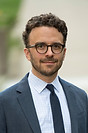
Nate Ela is Assistant Professor of Law and Faculty Affiliate in the Department of Sociology at Temple University. His research and writing focus on the law and political economy of urban resilience, and on election law reform. Ela teaches Land Use Planning, Constitutional Law, and a seminar on cities and climate change. In 2025-2026, he is a faculty fellow at Temple’s Public Policy Lab.
Ela’s first book, Cultivating the City: The Long Struggle to Put Land to Use will be published by the University of Chicago Press in 2027. His articles have appeared in law and social science journals including the Washington University Law Review, Ohio State Law Journal, Howard Law Journal, Fordham Urban Law Journal, Law & Social Inquiry, Social Problems, and Social Science History. Ela’s archival and ethnographic research has been supported by the Lincoln Institute of Land Policy, the National Science Foundation, and the Social Science Research Foundation.
Before joining Temple in 2023, Ela was Assistant Professor of Political Science and Law at the University of Cincinnati. He previously was a Visiting Scholar at the American Bar Foundation and taught at Northwestern Law School and Harvard Law School’s International Human Rights Clinic.

Hassan Elmouelhi is an architect and urban planner by training and works after getting his PhD (Berlin Technical University) since 2014 as a senior researcher, post-doc and project leader at the department of Urban Development, Campus El Gouna, and the department of International Urbanism and Design-Habitat unit at the Berlin Technical University (TU Berlin), Germany. His academic interests within the field of international urbanism include: culture and urban informality in relation to aspects of urban development and governance in the global South. In partnership with several academic institutions, and international cooperation organizations (e.g., UN Habitat and GIZ), he is involved in projects that cover interdisciplinary topics, mainly urban management, climate change adaptation, disaster risk management, public space, refugees and migration, urban mobility, urban law, new settlements, land management, in addition to the localizing global agendas. He participated as a consultant and expert for international cooperation organizations in projects in Egypt, Germany, Tunisia, Tanzania, South Africa, Malaysia, Lebanon, Iraq, Jordan, Palestine and India. His latest contribution as a consultant was as the main author for the “State of Arab Cities Report-2022” for the UN Habitat-Regional office for Arab states, published in February 2022.

Cuauhtémoc García Casas es Ingeniero Arquitecto, egresado de la Maestría en Ciencias de la Arquitectura, IPN. Con diplomados en Patrimonio Cultural; Planeación, Desarrollo y Derecho Urbanos. En su quehacer profesional destaca la Elaboración de los capítulos de Patrimonio Cultural de los Programas de Desarrollo Urbano Municipal de Centro, Tabasco y del Parcial Atlampa, CDMX; Realización de capítulos sobre Normatividad Urbana y Patrimonio Cultural en Proyectos Participativos del IECM, colonias Roma Sur II y Condesa; Creación del Censo de Patrimonio Cultural Afectado por Sismo del 19 de septiembre de 2017; Elaboración del apartado patrimonial en el Certificado Digital de la SEDUVI; Actualización de 22 Catálogos de elementos afectos al patrimonio cultural urbano y Revisión de 176 Áreas de Conservación Patrimonial de la CDMX; Creación de Declaratorias de Patrimonio Cultural Urbano: Polyforum Cultural Siqueiros y Teatro Blanquita; Fundador del Portal CiudadMX SEDUVI. Analista Especializado en la Dirección General de Terrenos Nacionales, de la Secretaría de Desarrollo Agrario, Territorial y Urbano. Anteriormente, como servidor público participó como Auditor de obra pública en la Auditoría Superior de la Federación; Perito en Ingeniería y Arquitectura, ante el Poder Judicial de la Federación; Subdirector de Evaluación y Aprovechamiento Inmobiliario, en el Instituto de Administración y Avalúos de Bienes Nacionales; Subdirector de Estudios y Proyectos del Patrimonio Cultural Urbano, en la Secretaría de Desarrollo Urbano y Vivienda.
Actualmente, en materia de Patrimonio Cultural trabaja en la actualización de los Programas de Desarrollo Urbano, Municipal de Querétaro y Parcial Zona de Monumentos y Barrios Tradicionales de Querétaro, Patrimonio Mundial UNESCO.

Diego Gil is an Associate Professor at the School of Government, Pontificia Universidad Católica de Chile, and an Adjunct Researcher at the Centro de Desarrollo Urbano Sustentable (CEDEUS). He holds a Doctor of the Science of Law (JSD) from Stanford Law School. His research explores the intersection of law and urban development, with a particular focus on how institutional frameworks shape the distribution of urban resources. His work has been published in leading academic journals in law and urban studies, including The American Journal of Comparative Law, Journal of Empirical Legal Studies, German Law Journal, Law & Social Inquiry, Cities, and Journal of Urban Health, as well as in regional outlets such as Revista Chilena de Derecho.

Sidney Guerra is a postdoctoral researcher at the Center for Social Studies (CES) – University of Coimbra; Visiting Researcher at Stetson University College of Law. Postdoctoral studies in Culture at the Advanced Program in Contemporary Culture – Federal University of Rio de Janeiro (PACC/UFRJ); Postdoctoral studies in Law – Mackenzie Presbyterian University (São Paulo). Holds a PhD and Master’s degree in Law (UGF). Habilitated (Livre-Docência) / PhD in International Relations (IRI/USP) and PhD in Environment (UERJ). PhD candidate in Political Sociology (IUPERJ).
Full Professor at UFRJ and Permanent Faculty Member of the Graduate Program in Human Rights (PhD and Master’s) at FND/UFRJ. Permanent Professor in the Graduate Program in Law – Cândido Mendes University (PPGD-UCAM). Visiting Professor at several institutions in Brazil and abroad.
President of the Human Rights Commission of OAB/RJ and Member of the Brazilian Bar Association – Rio de Janeiro (2025/2027). Member of the Special Commission on International Law of the Federal Council of the OAB (2025/2027). Vice-President of the Brazilian Society of International Law (SBDI).
Editor of INTER – Journal of International Law and Human Rights (Qualis A4). Coordinator of the Laboratory for Advanced Studies and Research in International and Environmental Law (LEPADIA) and of the Research Group in International Law (GPDI/FND/UFRJ). Coordinator of the Human Rights Observatory. Author of several books, as well as numerous articles published in specialized journals, co-authored books, periodicals, and conference proceedings. Member of the State Council for the Defense of Human Rights of Rio de Janeiro. Currently ranked as the 34th most cited jurist in Brazil, according to Ad Scientific Index. http://orcid.org/0000-0002-5309-662X
Luis Rubén Hernandez Vasquez

Ricardo Huchim Varguez serves as the Technical Coordinator of the Urban Planning Area at Acceso Urbano (a private sector initiative), where he leads processes involving territorial analysis, the development of planning instruments, and cartography generation using Geographic Information Systems (GIS).
He holds a degree in Habitat Design from the Autonomous University of Yucatán, specializing in urban territory planning and management. Since 2017, he has worked on the formulation of urban development programs, technical studies, and decision-support tools for municipal and state governments.
His expertise centers on the interplay between urban regulations, territorial analysis, and citizen participation mechanisms, with a particular emphasis on their implementation within local contexts. He has participated in projects aimed at improving urban conditions in vulnerable environments, as well as in the design of strategies for the integration and management of public spaces in metropolitan areas.
He possesses additional training in urban law, environmental impact assessment, and contemporary urban planning, including coursework at the College of Urban Jurisprudence (CJUR Internacional).
His work focuses on the legal analysis of urban planning and on strengthening regulatory instruments to enhance urban governance at the municipal level.
José Hiram Jiménez Hernández is a Maestro of Notarial Law at the College of Veracruz.
Perfil Académico
· Licenciado en Derecho por la Universidad Veracruzana
· Maestro en Derecho Notaria por el Colegio de Veracruz y el Colegio de Notarios de Estado de Veracruz de Ignacio de la Llave, México.
· Especialidad de Perito en Legislación Urbana y Derechos Humanos por el Colegio de Jurisprudencia Urbanística Internacional CJUR Internacional, México.
· Diplomado en Cabildeo y Negociación Política por la Universidad Iberoamericana, México.
· Curso en Negociación Arte y Ciencia por el IPADE, México.
Actividad Académica
- Conferencista en Materia de Legislación Urbana, Territorial.
- Ponente en el Urban Thinker Campus, México, Diciembre de 2023
- Ponente en el Urban Thinker Campus, El Cairo, Egipto, Noviembre de 2024.
- Presentador del Libro “SUMMAE Derecho Urbanístico Mexicano 2024”, World Urban Forum (WUF 12) del 2024 El Cairo, Egipto.
- Moderador en el Smart City Latam de junio de 2025, Puebla, México.
Actividad Profesional
· Director del Despacho de Gestión Territorial “Fundo Legal” desde el año 2010 al 2026.
· 10 años como Partner de Empresas Nacionales de Retail enfocadas en Expansión Nacional.
· 15 años como Asesor de Autoridades más de 50 Autoridades Municipales, Estatales y Federales en Materia de Regularización de la Tenencia de la Tierra, Derecho Patrimonial, Urbanismo, Impuestos.
· Lobying (Cabildeo y Negociación Política) ante el Poder Ejecutivo y Legislativo.
· Negociación en la Iniciativa Privada.

Noah Kazis is an assistant professor of law at Michigan Law. His research focuses on land use, housing, and local government law. He studies legal and policy mechanisms to make cities and suburbs more affordable, equitable, and integrated, as well as the internal institutional structures of local governments. Kazis’s work has been published in journals including the Harvard Law Review, Yale Law Journal, and Michigan Law Review. Before joining the Michigan Law faculty, he was a legal fellow at New York University’s Furman Center for Real Estate and Urban Policy. He also was an attorney for the City of New York, where he represented the city in matters including the development of legislation limiting greenhouse gas emissions from buildings, the defense and implementation of the sanctuary city policies, and two rounds of charter revision.

Melvin J. Kelley IV is a dual-appointed Associate Professor at Northeastern University within the School of Law and the D’Amore-McKim School of Business, Entrepreneurship & Innovation Group, where his scholarship focuses on fair housing law as well as the sociopolitical, geospatial, economic, and civil rights implications of decentralizing public authority in the United States. His work has been published or is forthcoming in the Stanford Law Review, Texas A&M Law Review, Connecticut Law Review, and Harvard Journal of Law & Gender among others. Prior to his present role, Kelley served as an Assistant Professor of Law at Villanova University Charles Widger School of Law, as well as the first Elizabeth Ann Zitrin Teaching Fellow with the Civil Rights and Restorative Justice Project at Northeastern Law, where he currently serves on the advisory board. Before academia, Kelley worked for both the Connecticut Fair Housing Center and the American Civil Liberties Union of Connecticut. Kelley earned his J.D. with Harlan Fiske Stone Scholar Honors from Columbia Law School and his B.A. in Political Science, Economics, and Africana Studies from the College of the Holy Cross.

Akif Khan is a Clinical Fellow at the Harvard Law School Food Law and Policy Clinic (FLPC). He is passionate about legal and policy mechanisms that improve waste reduction, resource circularity, and environmental, social, and economic sustainability. His work at FLPC includes building resources that improve domestic and international food donation pathways, highlighting and supporting national-, state-, and local-level food waste reduction policies, and analyzing the impacts of food waste on people and planet.
He received his J.D. from UCLA School of Law and received his Bachelors degrees from UC Irvine in Comparative Literature and Psychology, with minors in Materials Science Engineering and in Innovation and Entrepreneurship.

Dr. Evaldas Klimas is associate professor at Mykolas Romeris University in Vilnius, Lithuania. He teaches law students Real Estate and Construction law. He graduated from Vilnius University Law Faculty back in 2005 and successfully defended PhD thesis: "The principle of duty to co-operate, the implementation and significance of this principle in legal contractual construction relations" back in 2011. Fields of research: Territorial planning and construction, Land law, Environmental law, Protection of property rights, defense of public interest.
Dr. Evaldas Klimas is also a partner at Law firm WALLESS, where he is supervising the Real estate practice group at Vilnius office and is acknowledged practitioner by main directories (Legal500 and Chambers). A published author and expert in the real estate sector, Evaldas wrote a number of papers, among which one of the industry's leading papers in Lithuania - the Commentary on Zoning and Planning Law (2017), which was finalized during his stay in Seattle, USA as Fulbright scholar.
Dr. Evaldas Klimas is actively participating in the legislature process, related to real estate development; gave lectures and participated in numerous seminars and conferences. The core of his latest research are related to sustainable development principle, and recently - climate change management measures.

Gowri Krishna is a distinguished clinical educator and advocate for economic, racial, and social justice. She is a 2006 alumna of Fordham Law School. She began her legal career as an Equal Justice Works Fellow at the Urban Justice Center in New York City, directing a project that provided legal services to low-wage immigrant workers. She has taught community economic development clinics for over a decade at the University of Michigan, Roger Williams University and New York Law School.
An expert on immigrant-owned worker cooperatives, Krishna has addressed national law conferences, given numerous trainings and presentations, and written extensively on the topic. She currently serves as Co-President of the Clinical Legal Education Association.

Dr. Rajesh Kumar is an Assistant Professor at The Indian Law Institute, New Delhi, India. He has completed his LL.B., LL.M., and PhD. from the Faculty of Law, University of Delhi. He has also obtained M.A. (Masters) in Political Science. He has taught as visiting faculty at the Campus Law Centre, Faculty of Law, University of Delhi, and at the Delhi School of Journalism, University of Delhi. His academic contributions are reflected in a growing list of publications in reputed journals and edited volumes. His works include articles in the Journal of Campus Law Centre on themes such as federalism, smart cities, fiscal federalism, urban governance, and solar energy transitions; paper in Perspectives on Federalism on fiscal federalism in colonial India; and contributions to ICA’s Arbitration Quarterly on arbitration reforms. He has also authored book chapters such as “The Correlation-ship between the Chaturvarnya Concept and the Concept of Triguna” in Law and Spirituality: Reconnecting the Bond (2023) and “Right to Health During Pandemic: A South Asian Perspective” in Human Rights during the COVID-19 Pandemic: The South Asian Experience (Springer, 2024). His recent publication includes a chapter on money laundering and internal security concerns in Transnational Unconventional Organized Crime: A National and Global Security Concern (Springer, 2025). His commitment to the research has earned him numerous scholarships and funding support to participate in many international programs. Considering his credentials, he has been given the membership of Max Planck Alumni Association, Berlin, Germany, and of The Indian Society of International Law, New Delhi. His research interests are- Urbanization; Comparative Constitutional Law; Administrative Law; Federalism; and related aspects of Public Law, etc.

Emile Loza de Siles is Assistant Professor of Law, William S. Richardson School of Law, University of Hawai‘i at Mānoa. Her interdisciplinary scholarship centers upon artificial intelligence (AI) law, policy, and governance and AI impacts upon people, liberty, the judiciary, and the rule of just law. Professor Loza’s second body scholarship focuses upon Latin legal history, Latino/a/e educators in the legal academy, and equality in legal education. She publishes and presents extensively in the United States and abroad.
Since 2019, Professor Loza has served on the Institute of Electrical and Electronics Engineers’ AI Policy Committee and, since 2024, on the Hawai‘i Supreme Court’s Committee on Artificial Intelligence and the Courts. She co-founded the Graciela Olivárez Latinas in the Legal Academy (GO LILA!) Workshop, the only national academic forum of its kind. Professor Loza practiced technology and intellectual property law for some twenty years, representing Cisco, HP, and other innovators and the U.S. Department of Commerce Office of General Counsel. She clerked for Judge Sérgio Gutiérrez, Idaho Court of Appeals, and Commissioner Sheila Anthony, U.S. Federal Trade Commission. She holds a technology degree, an MBA, and a law degree from George Washington University School of Law, with an additional graduate cybersecurity credential and graduate data science studies from Georgetown and with Harvard Universities, respectively. Her ORCID ID is 0000-0002-6250-7099. Contact:eloza@hawaii.edu.

Muhammed Martini He is an archaeologist with an MA in Islamic Archaeology from Ain Shams University. He got
another MSC from TU—Berlin in Urban Development and a BA in Archaeology from Damascus University. Martini has diverse research interests in the urban, and archaeological fields such as Heritage Architecture, reused heritage building restoration, and social studies about refugees in Egypt. He has participated in the urban law conference since 2021, which covered different topics about urban laws and heritage, refugees, new urban areas in Egypt, and the reconstruction in Syria. He participated in archaeological excavations in Syria and He worked with TU. Berlin and other
German universities about industrial Heritage building in Egypt 2021. He also received a grant from the DAAD Council to study at TU Berlin University. he joined ICOMOS (International Council on Monuments and Sites) in 2022 and is a member of the International Society for Islamic Antiquities and Arts in Egypt.

Alessandra Mattoscio is a postdoctoral researcher at the University of Siena. She obtained a PhD in Law and Business from Luiss Guido Carli University, with a thesis on housing services. She is qualified to practise as a lawyer. She was visiting research fellow at Fordham Law School in New York, the University of Barcelona and the École Normale Supérieure in Paris. From June to October, she will be a visiting research fellow at the Max Planck Institute for Comparative Public Law and International Law in Heidelberg.

Valentina Montoya Robledo is an Assistant Professor at Universidad de los Andes, where she leads the Gender and Law Research Group and the Socio-legal gallery. Director of the transmedia project Invisible Commutes on domestic workers' Right to the City in Latin America, recently included in the 2023 Remarkable Feminist Voices in Transport. S.J.D. and LL.M. at Harvard Law School. M.A., LL.B., B.A. at Universidad de los Andes (Bogotá). Recipient of the 2020 Lee Schipper Memorial Scholarship for her research on domestic workers commutes in Bogotá, Medellín, and Sao Paulo. Former consultant of the Transport Gender Lab at the Interamerican Development Bank. Researcher, advocate and consultant on:
mobility, women's rights, human rights, and rights of people with disabilities.

Jamelia Morgan is an award-winning and acclaimed scholar and teacher focusing on issues at the intersections of race, gender, disability, and criminal law and punishment. Her scholarship and teaching examine the development of disability as a legal category in American law, disability and policing, overcriminalization and the regulation of physical and social disorder, and the constitutional dimensions of the criminalization of status.
Prof. Morgan received a B.A. in Political Science and a Master of Arts in Sociology from Stanford University, and her J.D. from Yale Law School.
A prolific and award-winning speaker and author, her publications include several articles on disability rights law and civil rights that have appeared in leading journals including the Columbia Law Review, Stanford Law Review, California Law Review, and Michigan Law Review.
Before joining the UCLA Law faculty, Morgan served as a professor at Northwestern Pritzker School of Law, UC Irvine School of Law, and the University of Connecticut School of Law.
Prior to law school, she served as associate director of the African American Policy Forum, a social justice think tank that works to bridge the gap between scholarly research and public discourse related to affirmative action, structural racism, and gender inequality.

Ivan K. Mugabi is currently a Fulltime Lecturer at King Ceasor University, Bunga, Kampala Uganda; he occasionally serves as a Supervisor of Masters Students in Oil and Gas Students at Kampala Petroleum Institute. His education background includes a Master of Philosophy from Cardiff University with the School of Law and Politics, a Human Rights Law from Cardiff University, UK Wales, a Master’s of International Commercial Law (LLM) - University of Glamorgan, UK, Wales, and Bachelor LLB (Hons) from Uganda Christian University: Mukono, Uganda. He likes research and publishing as a means of advancing new epistemological discourses.
Carlos Nandayapa Hernandez is an economist and Maestro of Urbanismo at FES Acatlán, UNAM.

Júlia Navarro Perioto is a postdoctoral researcher at the School of Economics, Business and Accounting of Ribeirão Preto, University of São Paulo (FEA-RP/USP), funded by the São Paulo Research Foundation (FAPESP). She holds a Ph.D. in Law from São Paulo State University (UNESP, 2025) and an LL.M. from the University of São Paulo (USP, 2016).
Her research focuses on the judicial enforcement of participatory urban planning in Brazil, with particular attention to the role of courts in this process. Her doctoral work examined how the São Paulo Court of Justice has addressed claims related to participation in the formulation and revision of municipal master plans under the City Statute between 2001 and 2021.
She has professional experience in private legal practice, having worked in civil, urban, and administrative law, including land regularization, cultural heritage, and urban planning, as well as advising civil society organizations on the right to the city.

Steven L. Nelson is an associate professor of education policy & leadership in the educational psychology, leadership, and higher education department. Before his current appointment, Dr. Nelson served on the faculty of the University of Memphis (as program coordinator) and the University of New Orleans. He has taught and led in charter schools, traditional public schools, and private schools in the New Orleans area. Dr. Nelson also served as the first-ever education advocate at the Southern Poverty Law Center’s School-to-Prison Pipeline Project in New Orleans. In addition, he worked on charter school law and policy, special education access and equity, and juvenile justice issues. Dr. Nelson’s research and teaching interests intersect with education law, policy, and education politics. In particular, his research and teaching consider how education reform laws, policies, and political dynamics advance, impede or regress efforts at achieving educational equity for Black students in urban settings. He considers himself a critical race theorist. His work has been published in various media, including law reviews, education journals, and edited books. Dr. Nelson’s work has been covered in the Washington Post and on national blogs, such as Cloaking Inequity. He maintains active memberships in the American Educational Research Association, the University Council of Educational Administration, the Critical Race Studies in Education Association, the Education Law Association, the Association of Urban Law Scholars, and the Law & Society Association. He fulfills leadership roles in some of these organizations and frequently presents scholarly works and professional developments at international and national conferences and research symposia.

Mr. Samuel Njuguna is an Associate Programme Management Officer, UN-Habitat, Policy and Legislation Section. He has ten years of experience in providing technical assistance and advisory services to countries and cities on housing law, urban governance, climate change, planning law, legislative drafting and human rights. Mr. Njuguna holds a Master’s degree in International Law from the University of Manchester, United Kingdom, and a Bachelor’s degree in Law from the Catholic University of Eastern Africa, Kenya.

Ngozi Okidegbe is an Associate Professor of Law and Assistant Professor of Computing & Data Sciences. Her focus is in the areas of law and technology, evidence, criminal procedure, and racial justice. Her work examines how the use of predictive technologies in the criminal justice system impacts racially marginalized communities.
Professor Okidegbe is a Faculty Associate at the Berkman Klein Center for Internet & Society at Harvard University and an Affiliated Fellow at Information Society Project at Yale Law School. She is also on the program committee of the Privacy Law Scholars’ Conference and serves on the advisory board for the Electronic Privacy Information Center. She also was recognized with a Moorman-Simon Interdisciplinary Career Development Professorship, which she held from 2022 to 2025.
Prior to joining Boston University, Professor Okidegbe was an Assistant Professor of Law at Cardozo School of Law, where she first joined as the inaugural Harold A. Stevens Visiting Assistant Professor in 2019. Before joining Cardozo, Professor Okidegbe served as a law clerk for Justice Mbuyiseli Madlanga of the Constitutional Court of South Africa and for the Justices of the Court of Appeal for Ontario. She also practiced at CaleyWray, a labor law boutique in Toronto.
Professor Okidegbe holds a Bachelor of Civil Law and a Bachelor of Laws from McGill University’s Faculty of Law. She subsequently earned her Master of Laws from Columbia Law School, where she graduated as a James Kent Scholar.
Professor Okidegbe’s articles have been published or are forthcoming in the Critical Analysis of Law, Connecticut Law Review, Wisconsin Law Review, UCLA Law Review, Cornell Law Review, and Michigan Law Review.
is an Associate Professor of Law and Professor of Computing and Data Sciences at Boston University

Priyanka Paul is a highly accomplished academic and professional with expertise in geodesy, geoinformatics, and environmental geography. She holds a master’s degree in Geography and Environmental Science from Jagannath University, Bangladesh, and is currently pursuing a Master's in Geodesy and Geoinformatics at the Technical University of Berlin. Priyanka has extensive research experience in disaster management, environmental analysis, and modeling, and has published several papers in reputed academic journals. She has also worked as a consultant and data analyst for companies such as Google Czech Republic s.r.o., Wittmann & Ladigin GbR.

José Antonio Peniche Gallareta is an architect, urban designer, and planner with more than three decades of experience in urban development, integrating design, public policy, and urban law. He graduated from the Autonomous University of Yucatán and holds a Master in Urban Design Studies from Harvard University. He is currently a doctoral candidate in Strategic Management and Public Policy at Anáhuac-Mayab University. His professional trajectory spans the Yucatán Peninsula and Boston, where he lived for ten years and worked with community-based organizations on urban planning, land use, zoning, and housing. During this time, he served on the Jamaica Plain Neighborhood Council and was an associate member of the American Institute of Architects (AIA Boston). He has led the design of numerous urban master plans and municipal development programs across southeastern Mexico, contributing to sustainable territorial planning and regulatory frameworks. In 1998, he directed a landmark diagnostic study for the community of Yaxunah, supported by the Inter-American Foundation. He served as Director of Urban Development for the City of Mérida, where he coordinated updates to the Urban Development Program and key regulatory instruments, including construction and urban image codes, and contributed to accessibility standards and legislation. He has also been a university professor and a professional leader, serving as President of the Colegio Yucateco de Arquitectos and as a member of the National Executive Council of FCARM. He currently leads Acceso Urbano SCP, advising governments and developers on sustainable urban planning, governance, and implementation strategies.

Davianni Polanco Santana is a Dominican attorney and a second-year Juris Doctor candidate at Fordham University School of Law. After earning her Bachelor of Laws, summa cum laude, from the Pontificia Universidad Católica Madre y Maestra, she chose to pursue a J.D. in the United States to gain training in the common law system and complement her civil law background. During her undergraduate studies, she authored her graduating dissertation on the international trend toward the convergence of civil and common law systems. She is admitted to practice law in the Dominican Republic.
Before beginning her J.D., Davianni practiced as an associate attorney in the Dominican Republic, where she developed experience across a wide range of civil and commercial matters, including litigation, contract drafting and negotiation, real estate transactions, and corporate formation. This breadth of practice shaped her interest in how legal frameworks operate across different institutional and regulatory contexts.
At Fordham, Davianni is a member of the Dispute Resolution Society and has competed in the Willem C. Vis International Commercial Arbitration Moot. She is also a member of the Fordham Journal of Corporate & Financial Law. She has conducted research under the supervision of Professor Norrinda Brown in collaboration with the Fordham Urban Law Center, focusing on comparative legal frameworks for climate resilience and urban governance. This work involved comparing legal approaches to climate resilience across different jurisdictions.
Davianni’s academic interests center on litigation, international law, and comparative legal systems.
Arianne Berenice Reséndiz Flores is a Profesora de Carrera Asociado "C" TC ND at FES Acatlán, UNAM

Daniel B. Rosenbaum is an associate professor at Michigan State University College of Law, where he teaches Local Government, Property, and the Local Government Policy Lab. His research explores how local institutions function, evolve, and interact with each other against a backdrop of opaque or inconsistent state oversight. Professor Rosenbaum employs public records requests, interviews, empirical methods, and geospatial tools to understand and distill the operations of under-the-radar local institutions ranging from land banks to airport authorities to parks departments. His scholarship has been published or is forthcoming in the Yale Law Journal, Indiana Law Journal, University of Richmond Law Review, Buffalo Law Review, and Marquette Law Review. Prior to joining MSU Law, Professor Rosenbaum spent two years as a visiting assistant professor at the University of Detroit Mercy School of Law, where he taught Property, Estates & Trusts, and Local Government and was appointed editor-in-chief of the Michigan Real Property Law Review, a position he still holds. Professor Rosenbaum entered academia after serving as executive director of a public authority that managed distressed property in the Detroit region and advised local municipalities on issues of divestment, land ownership, and development. A native of Chicago, Illinois, Professor Rosenbaum earned a B.A. from Washington University in St. Louis and a J.D. from Harvard Law School. He currently lives in Ann Arbor, Michigan.
Fernando A. Rosete Vergés is a Maestro and Doctor en Geografia at ENES Morelia UNAM

Aaron Saiger is Professor of Law at Fordham Law School, where he has taught since 2003. At Fordham, he holds the Albert A. Walsh Chair in Real Estate, Land Use, and Property Law, and is the faculty director of the Fordham Urban Law Center. He received his Ph.D. from the School of Public and International Affairs (then the Woodrow Wilson School) at Princeton University (2004), his J.D. from Columbia University (2000), and his A.B. from Harvard College (1988). He was law clerk to the Honorable Ruth Bader Ginsburg of the United States Supreme Court (2001–02) and the Honorable Douglas H. Ginsburg of the United States Court of Appeals for the District of Columbia Circuit (2000–01). Saiger writes and teaches in the areas of administrative law, education law, local government, property, and urban affairs.

Remigio Sarmiento holds a Master's degree in Urban Planning with a specialization in Urban Management and a Bachelor's degree in Social Development from the University of Cuenca, Ecuador. He currently works as a Social Technician in the Strategic Management Unit of the Planning Directorate of the Decentralized Autonomous Government (GAD) of the Municipality of Cuenca.
He has a proven track record in territorial development, having coordinated key projects such as the Parish Development Plans and leading the technical coordination of the Consortium of Parish Governments. His experience also extends to conflict mediation as a Community Mediator for the Arbitration and Mediation Center of the Chambers of Production of Azuay.
Remigio has been recognized for his academic excellence in the Governance, Political Management, and Public Administration Program. He also maintains an active civic commitment as a member of the Allywyñay Foundation and the Citizens Committed to Cuenca association, linking technical planning with citizen participation and sustainable social development.

Nadav Shoked is professor of law at Northwestern University Pritzker School of Law. He joined the Northwestern faculty in 2012 as an Assistant Professor of Law. Previously, he was a Visiting Assistant Professor at the University of Texas School of Law. His work focuses on the law and theory of property, on local government law, and on American regulatory law.
Ji Seon Song

Kenneth Stahl is a Professor of Law and the director of the Environmental, Land Use, and Real Estate Law certificate program at Chapman University Fowler School of Law. He is the author of Local Citizenship in a Global Age (Cambridge University Press 2020), which discusses how the nature of citizenship and the relationship between local and national governments have been transformed by globalization. Professor Stahl's other works have appeared in many journals. His research combines doctrinal analysis with insights from disciplines including urban sociology, geography, economics, and the humanities. In 2021, the Fowler School of Law awarded Professor Stahl the Michael Lang Award for Scholarly Excellence. He was also named the Kennedy Professor of Law for 2021. Before joining Fowler, Professor Stahl spent four years as an Assistant United States Attorney in the Eastern District of New York. Prior to that, he worked as a Trial Attorney for the United States Department of Justice, Office of Constitutional Torts, and as an Associate at the Washington, D.C. law firm of Arnold & Porter. Professor Stahl earned a B.A. with Highest Honors and Highest Distinction from the University of Michigan, and a JD from Yale Law School. At Yale, he served as a Notes Editor of the Yale Law Journal and an editor of the Yale Journal of Law and The Humanities. Professor Stahl is also a land use attorney who works to ensure that cities’ land use policies comply with state and federal law, and a board member of People for Housing, Orange County, a chapter of the "Yes In My Backyard" movement that seeks to reform zoning laws to legalize the production of more housing.
Arturo Tovar Goris

Gabrielle Towson, originally from Washington, D.C., is a 2026 J.D. candidate at Fordham University School of Law in New York City. She currently serves as a Research Assistant at the Fordham Urban Law Center, contributing to a legal case study for UN-Habitat evaluating law and policy frameworks for climate-resilient public infrastructure. At Fordham, she also serves as Symposium Editor of the Environmental Law Review and Associate Editor of the Fordham Law Voting Rights and Democracy Forum. Gabrielle holds a B.A. cum laude in Urban Studies from the University of Pittsburgh, where she was a Browne Leadership Fellow and David C. Fredrick Honors College Research Fellow.
_JPG.jpg)
Dr. Jerome Uchenna Orji is an Attorney admitted to the Nigerian Bar. He holds an LL.B (Hons.) degree from the University of Nigeria, and an LL.M from the University of Ibadan, with specialization in cybersecurity and information technology law. He also holds a PhD in Law from Nnamdi Azikiwe University, Nigeria, with specialization in telecommunications law. He is the author Cybersecurity Law and Regulation (Wolf Legal Publishers: The Netherlands, 2012), International Telecommunications Law and Policy (Cambridge Scholars Publishing: United Kingdom, 2018), and Telecommunications Law and Regulation in Nigeria (Cambridge Scholars Publishing: United Kingdom, 2018), in addition to several peer reviewed papers on cybercrime, cybersecurity, data protection, telecommunications regulation, and other aspects of law. Uchenna is a Fellow of the African Center for Cyber Law and Cybercrime Prevention (ACCP), located within the United Nations African Institute for the Prevention of Crime in Kampala, Uganda. Uchenna has also worked as an expert for the Council of Europe, the Commonwealth Secretariat, the Dutch Government, the NATO Cooperative Cyber Defence Center of Excellence, Estonia and the Government of Nigeria’s Presidential Advisory Committee Against Corruption. He is currently an Assistant Professor of Law at the American University of Nigeria, Yola, Adamawa State, Nigeria.

Weibo Zhou is a doctoral researcher in Economics and Entrepreneurship at Daugavpils University, Latvia. Research interests lie at the intersection of urban digital twins, ESG integration, sustainable entrepreneurship, and digital governance, with a particular focus on how the twin transition reshapes urban and institutional development in Europe. Zhou holds a Master’s degree in World Economy from Belarusian State University and a Bachelor’s degree in Business Administration from Nanjing University. Recent work has appeared in Web of Science-indexed journals, including Entrepreneurship and Sustainability Issues and Access to Science, Business, Innovation in the Digital Economy. These publications address digital twin governance, legitimacy, sustainability management, and entrepreneurship in the context of contemporary urban transformation. Current research extends these themes to digital twin readiness, public governance, and institutional responses to sustainability and corruption-related challenges in Europe. Zhou has presented at a range of international academic conferences in Europe and beyond. This body of work is characterised by a strongly interdisciplinary approach combining management studies, sustainability research, urban governance, and digital transformation.